EQUINE STUDIES ONLINE STUDY

- Become an Equine Industry Professional
- Start a business, get a job, advance a career
- Self paced, 1500 hour course -more comprehensive than most diplomas offered elsewhere.
Before Enrolling -Get some advice from one of our faculty -Click to use our free advisory service
COURSE CONTENT
This comprehensive course is made up of the following 15 modules, totaling around 1500 hours of study.
Horse Management I
Learn to manage the daily requirements of a horse at grass.
The course aims to develop:
- The ability to handle horses using a range of different procedures
- Skills to evaluate a horses conformation
- An understanding of diet
- Knowledge of grooming procedures
- An ability to develop appropriate management procedures for a specific situation.
- Knowledge of commercial opportunities in the horse industry, including how to buy and sell horses.
The course includes most of the subject material in the course "Keeping a Horse" plus more. It covers:
- Terminology; Horse Psychology; Using tack; Parts of the body
- The digestive system; Evaluating the value of a paddock
- Grooming for different purposes (e.g. dressage, shows, stock work)
- Business applications (e.g. racing, riding schools, breeding, stock agent)
- Students need to provide proof that they have ridden and handled a horse prior to completing this course
 Horse Management II
Learn about feeds, stabling, foot care, bedding, tack, conditioning, and other areas relevant to caring for horses in a stable,
There are seven lessons:
1. Feeds - Roughage, Concentrates, Green feed, etc
2. Stabling - Stalls, Stables, Barns, etc
3. Bedding and Mucking Out
4. The Foot and Shoeing
5. Exercise and Conditioning
6. Tack and Tack Fitting
7. Horse Facility Design
Horse Management III
All about managing health and condition of horses in different situations. Learn to identify signs of poor condition, and address those problems appropriately. There are six lessons:
1. Blankets, Bandages and Boots
2. Maintaining the Health of Horses
3. Clipping, Trimming & Plaiting
4. Travelling & Horse Care Away from Home
5. Organising & Managing a Horse Event
6. Managing a Horse Enterprise
Equine Behaviour
Develop your understanding of equine behaviour, and your ability to apply that to the welfare and training of the horse. This course is comprised of seven lessons, outlined below:
1. Introduction: Influences and motivation
2. Genetics and Behaviour
3. Equine Perception and Behaviour
4. Communication and Social Behaviour
5. Sexual and Reproductive Behaviour
6. Learning and Training
7. Behavioural Problems
Breeding Animals
Learn to plan implementation of an animal breeding program using genetic theory, practical applications to daily husbandry practice, and management of animal breeding programs. There are 7 lessons as follows:
- Introduction To Genetics
- Genetics
- Selection
- Pure Breeding
- Introduction To Cross Breeding
- Cross Breeding
- Livestock Improvement
 Pasture Management
Learn to evaluate, design and make decisions about the management of pasture for different purposes and animals, including horses.
Event Management
Learn to plan, create, manage, and evaluate a successful equine-related event in sport, recreation, tourism, agriculture, or other area.
Animal Anatomy and Physiology I
Develop a sound foundation knowledge of animal biology - anatomy and physiology.
Animal Health
Learn to describe common diseases in animals, and to recognise and treat these diseases and wounds.
Animal Feed and Nutrition
Learn about the composition of a range of feeds, including pasture, fodder crops, grasses, cereals, seed, and other edible plants. This course also explains the role of proteins, vitamins and minerals in animal diets.
Farm Management
Improve your capacity to more effectively manage a farm or agricultural enterprise which services farms.
Sustainable Agriculture
This course presents many different techniques and general measures which may be adopted in part or full to move a farm toward greater sustainability.
Pasture Management
Learn about soil properties and requirements in agriculture, and how to apply that knowledge at a management level in an equine business.
Research Project I
Learn to plan and conduct research into the current status of an aspect of the equine industry relating to their area of study, and to complete a descriptive report based on that research
Workshops I
Develop your capacity to identify, select and apply knowledge and skills to appropriate perform workplace tasks in the equine industry through a problem-based learning project.
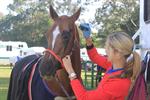
Working with horses is first about giving and receiving respect; often followed by the beginning of an ever-lasting bond. Undoubtedly, working with horses in such a way to develop positive and lasting relationships does not come easily and you must pay special attention to understanding horses as kind animals with much to give. They often have a willingness to please and special place in the hearts of their owners.
Horses are commonly thought of as domesticated animals (though they can also be wild animals). Their general physical and psychological characteristics make them a preferred animal for work and pleasure in the modern world.
Horses have an immense capacity to be tamed and trained; a dependence on us or other horses; a submissive and noble character; a highly developed digestive system enabling them to survive on the poorest of feed and a speed rivaled by few other land mammals. These traits make horses a favourite animal for humans to work with. Sadly, for the horse, these same traits often result in the mistreatment of these remarkable animals.
So as wonderful and rewarding horse ownership can be, it takes immense amounts of time and dedication – owners should prepare to spend more time caring for their horse than actually riding it. Horse care involves a sequence of repetitive tasks including feeding and watering; grooming and the provision of health care; cleaning of their living environment and equipment; and of course, exercise.
Over many years, horses have been domesticated in different parts of the world, leading to a huge variety in breeds and types. Selective breeding for specific uses has formed ‘modern’ horses of four general types:
- Hot bloods (e.g. Arab and Thoroughbred)
- Warm bloods (e.g. Carriage and Sport horses)
- Cold bloods (e.g. heavy Draught horses)
- Ponies (e.g. Exmoor, Dartmoor, Icelandic )
These four types are based on the differences in temperament and speed of the animals, rather than anything to do with the actual temperature of the horse’s blood. Hotblooded horses like Arabs and Thoroughbreds tend to be more quick-witted and ‘sharp’ and also possess great speed across the ground. Coldblooded horses tend to be of a more even, quiet temperament and are generally bigger built in stature and therefor incapable of achieving speeds similar to a Thoroughbred.
What's Different About this Diploma?
- Options to choose relevant electives that you might not find in equine diplomas elsewhere. (compare the modules we offer)
- A longer, more in depth diploma than what is offered at many other colleges (Compare the duration -1500 hours -here with elsewhere). Study more, learn more, go further in your career or business.
- Exceptional tutors...compare the qualifications and experience of our staff (see staff profiles at ... http://www.acsedu.com/about-us/our-staff.aspx) ....after all, it doesn't make sense to choose where to study if you don't first know who will be teaching you.
-
Many tertiary graduates are under employed; many employers can't find appropriate staff - There is a clear mis-match between mainstream education and industry. Qualifications do not make employers money! Employees with high level, appropriate learning can make money. Employability is affected mostly by what you learn through studies, rather than the qualifications. Qualifications impress politicians and bean counters who fund universities; but they are not so impressive to many employers.less.
Any questions?
Our equine tutors are happy to help, so please ask.