ONLINE STUDY AFRICAN VIOLETS
- Indulge a passion for African Violets, Gloxinias and other Gesneriads
- Learn how to Grow and Use African Violet Plants
- Work in or start a nursery or expand your skills in the horticulture trade
- For the enthusiast or commercial grower.
Lesson Structure
There are 8 lessons in this course:
-
Introduction
-
What is an African Violet
-
Plant name pronunciation
-
Review of the system of plant identification
-
Introduction to Gesneriads
-
Classification of Gesneriaceae
-
Introduction to most commonly grown African Violet Species
-
Information contacts (ie: nurseries, seed, clubs etc.)
-
Culture
-
Understanding how plants grow
-
Soils ad nutrition
-
African Violet potting mixes
-
Other cultural practices -Planting, watering, feeding, etc.
-
Review of Gesneriad Genera -Columnea, Streptocarpus, Episcia, Aeschynanthus etc
-
Propagation
-
Sexual and asexual explained
-
Propagation aids -greenhouses, hotbeds, cold frames, misting etc.
-
Cuttings
-
Seed
-
Division
-
Pests & Disease
-
Plant maintenance and health
-
Identifying problems
-
Controlling problems
-
Reviewing pest, disease and environmental issues that can confront African Violets
-
Light and its Affects
-
Understanding light affects on african violet flowering
-
Artificial lighting
-
Greenhouse Culture
-
The greenhouse system
-
Components of a greenhouse (floor, structure, ventilation, heating, etc)
-
Types off Greenhouses
-
Shadehouses
-
Cold frames
-
Heated propagators
-
Environmental controls
-
Heaters, Ventilators, etc
-
Ways to Use African Violets
-
Containers, in the ground, in greenhouses, growing for profit (to sell etc.)
-
Review of popular cultivars
-
Special Assignment
-
PBL Project: Planning the establishment of a collection of Gesneriads, for a specific (real or hypothetical) location.
Aims
-
Describe how African Violets and related plants are classified and the plant naming system
-
Describe the cultural requirements of African violets
-
Select appropriate propagating materials and using them, propagate African violets.
-
Identify and control pest and diseases of African violets
-
Discuss the role that light plays in the growth of African violets
-
Describe greenhouses and other environmental control equipment used for growing African violets.
-
Describe the various ways in which African violets can be grown
-
Demonstrate the knowledge acquired for a specific group or individual plant in the Gesneriaceae family through research.
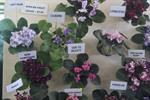 What are African Violets?
African violets belong to the genus Saintpaulia. They are native to Tanzania and adjacent south eastern Kenya in tropical Africa. The common name African violet is a description that came about due to their resemblance to a flowering violet.
There are approximately 21 species of Saintpaulia and they have the following characteristics:
- They are all terrestrial (ie. growing in soil), perennial, herbaceous plants.
- Leaves are hairy and usually arranged either opposite or caulescent.
- Leaf blades are petioled.
- Leaf shape is orbicular to elliptic.
- Leaves are commonly fleshy.
- Flowers occur either individually or several.
- The calyx is divided into two parts.
- There are 2 stamens.
- The anthers are yellow.
- The ovary is superior.
African violets can be classified into broad groups according to different obvious characteristics such as:
Flower shape:
- Single flowers have five petals
- Semi double flowers have six to nine petals
- Double flowers have two or more complete rows of petals (With five petals to a row this means more 10 or more petals).
- Petals can also have shape variations (eg. frilled, fringed, picot, waved edge etc).
Leaves
Can vary in size, colour and shape, including dark to light green and even variegated.
Growth Habit
- Standards are the common rosette forming plants
- Miniatures are plants smaller than 15cm diameter
- Semi Miniatures are plants 15-18cm in diameter
- Trailers are plants which develop several crowns or growing points, as such they can become much larger plants than standards.
WHO CAN BENEFIT FROM THIS COURSE?
- Nurserymen
- Florists
- Indoor plantscapers
- Amateur
- Professional plant collectors