STUDY PHOTOGRAPHIC PRACTICE ONLINE
- Learn to take better photos.
- Develops your hands on practical skills in taking photos
- Learn through both theory and highly practical assignments with individual direction and interaction with a professional photographer (tutor).
Lesson Structure
There are 8 lessons in this course:
-
Composition
-
Choosing the subject, Lighting the subject, Placing the subject in the frame, Choosing the medium for recording,
-
Photographing People
-
Snapshots, Portraiture, Posing for Photographs, Nude Photography, Fashion, Photography & Wedding Photography
-
Nature & Landscape Photography
-
Photographing Water, Plants, Landscapes & other Natural subjects
-
Colour vs. black & white
-
Types of film, Analysing photos, Photography for newspapers, etc.
-
Special Techniques
-
Creating Effects,Sport Photography, Events photography including candid shots
-
Illustrative Photography
-
Telling a story with a photo (eg. advertising, sports event, fashion parade or art exhibition), Streetscape photography etc.
-
Publishing
-
Illustrating articles, Analysing photos in magazines, Understanding the industry and photo opportunities
-
Business Opportunities in Photography
-
Freelance photography, Commercial photography, Planning a Photographic Session, Studio Photography, What to Charge, Gallery Sales, Written Contracts
Aims
-
Compose photographs in a way that matches a predetermined aim.
-
Explain a variety of ways to take better photographs of people.
-
Explain a variety of ways to take better photographs of landscapes or other natural subjects.
-
Differentiate between appropriate use of colour and black and white photography.
-
Create varied visual affects through the use of special techniques.
-
Explain a variety of ways to take better illustrative photographs.
-
Explain a variety of ways to take better photographs for use in print or electronic media.
-
Determine the nature and scope of business opportunities in photography.
Tips for Creating Photographic Effects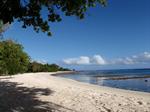
- An area looks larger when the floor or ground surface is smooth (e.g.: a person standing in long grass looks to be in a smaller area than a person standing on closely mown grass)
- A smooth boundary will make an area seem larger.
- Shadows or openings at one side of an area will make it seem wider.
- Looking downhill makes a distance seem longer.
- Looking uphill makes a distance seem shorter.
- Repetition can sometimes be used to highlight aspects
- Spaces which are too small can be oppressive.
- Large spaces are empty & hollow unless there are a large number of people in those spaces.
- Long spaces (in large scale public landscapes) can be overdone becoming psychologically exhausting.
- To achieve a harmony in space in enclosed areas the ratio of building height to space width should be no more than 1:4.
- Coarse textures decrease the apparent size of spaces.
- Fine textures will make small spaces look bigger.
- Flowing curved lines are passive, soft and pleasant.
- Geometric lines & shapes are solid, strong and formal.
- Sharp, straight irregular lines create an active, vigorous feeling.
- A space can be made to appear larger by making trees and other features from adjoining properties appear to be part of itself.
- A wide angle lens will appear to give more depth to a photograph.
- A longer lens will "flatten" the perspective of an image, making relative distances appear closer together.
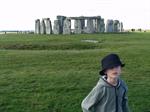 How Much Should You Plan for a Photo?
Some photos are contrived, with a great deal of planning and preparation undertaken before they are shot; while others happen unexpectedly.
There are two parts involved in the creation of any photo:
- The photographer and their equipment - the part that captures an image.
- The subject and surroundings - the things that are captured in the image.
Sometimes both of these parts are planned for, sometimes only one part is planned for, and occasionally nothing is planned - such as in a candid photo.
A candid photo is one taken without control over the subject. Candid photos may happen on a planned photo shoot or on occasions where there has been no planning at all.
Commonly (but not always), a candid shot may be a ‘snapshot’. A snapshot is usually thought of as a photo that has been taken without a great deal of care, on the spur of the moment. A good photojournalist will often anticipate a subject’s next move and have the camera ready.
Candid and snapshot photography are certainly different to contrived or posed studio photography; which by definition would always be done with both proper planning and utmost care.
Professional photographers sometimes create a ‘snapshot style’ in their photography. This is done by planning to capture an image that appears casual, with subject matter that represents a scene that was captured unexpectedly, (however, it may well have been set up, anticipated, or sought out).
Characteristics of a snapshot
- Casual
- Common place or every day subject matter
- Apparent disorder
- Often contains motion
- Can be very comical
Good snapshots and casual photos come by taking risks and putting yourself into a wide variety of different places and situations. Always being ready to take a photo, and never hesitating to shoot.
Candid photography is often a numbers game, where the more you take, (hopefully) the more likely you are to get some great shots. Be ruthless with bad shots and don’t hesitate to discard or delete.
Take calculated risks. If you try to wait for the best light conditions, a better angle or closer proximity to a subject, you may miss creating an excellent image.
A fast sports setting is often appropriate for candid photography, allowing you to shoot multiple photos fast and repeatedly, and hopefully some will be just what you were hoping to capture.
Planning for Candid Photography
As with any photography, being prepared increases your chance of getting a good photo.
Certain types of cameras that are quick to adjust can be easier to use for candid shots than others. Candid photography works well in certain situations (such as an event), but you should do your homework before attending any event.
Carrying more than one camera may help you capture the perfect shot, with different cameras set ready to use for different types of shots.
Be sure you understand if there are any legal restrictions on what you can shoot. In some countries or situations, it can be illegal to photograph certain things, or to use photographs you have taken in certain ways.