STUDY ONLINE PLANT PATHOLOGY
Become skilled at diagnosing and understanding plant diseases.
Plant production is reduced significantly every year, due to pathological problems. To control these problems is to increase productivity, and for the horticultural business; that means increased profit margins.
PLANT PATHOLOGY IS NOT simply a study of pests & diseases. Some pests are in fact not pathological problems, and there are pathological problems which are not pests or diseases.
PLANT PATHOLOGY is about problems in plants caused by physiological damage or irritation at a cellular level. It is concerned with problems which affect parts of the plant cell, leading to malfunctions in the normal processes which occur
Horticulture Tutors
Diana Cole B.A. (Hons), Higher Dip. (Garden Design), RHS Advanced Cert. Horticulture, Cert Admin.Mgt., Dip. Inst. Personnel Management
In addition to her RHS horticulture, garden design, City & Guild construction, NPTC pesticide/legislation and business/management qualifications, Diana has a variety of skills drawn from setting up Arbella Gardens, a landscape gardening business. She also has administrative, management and training delivery experience drawn from her employment in other organisations such as the NHS and other educational institutions such as schools & universities. She has augmented her training expertise having gained the Preparing to Teach in the Life Long Learning Sector qualification. She also has experience gained through working as a volunteer in a number of different roles including amenity style gardening in parks and practical conservation work.
Maggi Brown Cert.Ed.(Environment)
Maggi is regarded as an expert in Organic Growing throughout the UK, having worked for two decades as Education Officer at the world renowned Henry Doubleday Research Association (now Garden Organic). She has been active in education, environmental management and horticulture across the UK for more them three decades.
Yvonne Sharpe RHS Cert.Hort, Dip.Hort, M.Hort, Cert.Ed., Dip.Mgt.
Over 30 years of experience in horticulture, education and management, Yvonne hastravelled widely within and beyond Europe, and has worked in many areas of horticulture from garden centres to horticultural therapy. She has served on industry committees and been actively involved with amateur garden clubs for decades.
Thady Barrett M.Hort (RHS M.Hort) Thady is a consultant to the horticulture industry in the UK, with particular interest in the ornamental plant sector. Previously a senior lecturer at Writtle College for 20 years which included being course tutor for RHS qualifications. Wide ranging practical horticultural experience but with specific interest in propagation techniques and plant production technologies. Member of the International Plant Propagators Society (IPPS) and awarded the Rose Bowl Award in 2009 in recognition of his contribution to the society.
Lesson Structure
There are 8 lessons in this course:
-
Introduction
-
Overview of plant disease
-
Diagnosis of problems: nutritional, environmental, pathological
-
Symptoms
-
Common terminology
-
Types of Diseases
-
Morphological changes
-
Necroses
-
Hypoplases
-
Hyperplases
-
Types of pathogens: viruses, bacteria, actinomycetes, fungi, nematodes
-
Techniques for diagnosing plant diseases: optical equipment, preparing pathogens for observation, culture methods, inoculation, etc
-
Plant viruses; detection and diagnosis
-
Plant nematodes
-
Case study: Australian plant nematodes
-
Main types of diseases
-
Spots
-
Rots
-
Cankers
-
Galls
-
Mildews
-
Rusts
-
Moulds
-
Wilts
-
Scabs
-
Others
-
Using a key to diagnose diseases in plants
-
The Lifecycle of a Disease
-
Inoculation
-
Penetration
-
Infection
-
Growth and reproduction
-
Dissemination
-
Methods of penetration by bacteria and nematodes
-
Lifecycle of nematodes
-
Fungal biology
-
Role of insect spreading fungal and bacterial pathogens
-
Control Techniques
-
Sanitation
-
Resistant Plant Varieties
-
Biological Controls
-
Soil Drenches/dips
-
Chemical Controls
-
Nematicides
-
Soil fumigants
-
Contact poisons
-
Fungicides and the environment
-
Systemic fungicides
-
Misters, dusters, blowers, sprayersSpray maintenance and cleaning
-
Natural controls: cultural, physical, biological, etc
-
Terminology
-
Selected Pathogen Diseases Ornamentals
-
Fungi affecting turf
-
Phytopthera cinnamomi
-
The process of tree decay: Shigo
-
Case study: how phytopthera cinnamomi kills a susceptible Eucalyptus
-
Peach powdery mildew
-
Rose powdery mildew
-
Honey fungus on rhododendrons and azaleas
-
Petal blight on rhododendrons and azaleas
-
Selected Pathogen Diseases Crops
-
Sclerotinia rot in vegetables
-
Nematodes and citrus production
-
Citrus diseases: scaly butt, lemon crinkle, citrus canker
-
Brown rot
-
Fire blight
-
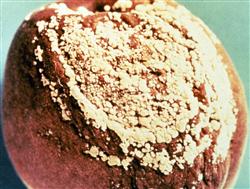
Apple fruit rot caused by trichoderma harzianum
-
Prunus necrotic ringspot virus in cut flower roses
-
Potato and tomato blight
-
Club root
-
Non-Infectious Diseases
-
Nutritional disorders
-
Lack of water
-
Excess water
-
Other environmental problems
-
Disorders caused by man: mechanical damage, pollution
-
Case Study: Air pollution
-
Other disorders: genetic, disturbed growth
-
Non parasitic turf problems
-
Special Project
Each lesson culminates in an assignment which is submitted to the school, marked by the school's tutors and returned to you with any relevant suggestions, comments, and if necessary, extra reading.
Aims
-
Describe a range of pathological problems that affect plants.
-
Describe symptoms of a range of diseases that affect plants.
-
Describe disease life cycles and explain how this knowledge can be applied in disease control
-
Explain the methods used to control diseases
-
Demonstrate a comprehensive knowledge of a particular plant pathogen.
-
Identify and describe a range of non-infectious diseases and problems that affect plants
-
Identify and describe a range of common pathogens that affect ornamental plants.
-
Identify and describe a range of common pathogens that affect crop plants
The first part of the course develops an understanding of the different types of problems which can occur and how to identify them.
Terminology is covered in some depth, so as to enable the student to be able to read & understand books & articles written about plant diseases. Other major topics of study include "symptoms" (ie: Necroses, Hypoplases, Hyperplases, etc), "types of pathogens" (ie: Viruses, bacteria, fungi, Nematodes, etc), and the lifecycle of a disease.
The second part of the course looks at how to control pathologyproblems. The major methods of controlling pathogens (ie: Sanitation, resistant varieties, biological controls, soil drenches & chemical sprays, etc) are all studied, along with types of equipment & safety.
The third part of the course looks at some of the most common plant pathology problems in commercial horticulture, how to identify them and how they are controlled.
Some of the problems studied include cinnamon fungus, tree decay, powdery mildew, nematodes, brown rot, blights, turf fungi, damping off and non infectious problems such as temperature burns, air pollution, wind burn and excessive light.
The course is a highly practical one involving as much time in practical/field work as it does theory.
No prior formal training is required, though anyone undertaking this course is expected to have some experience in horticulture (either having worked in the industry or having studied in some related discipline.
Click here to visit the ACS online bookstore and view outlines of books related to this subject
More Information on ACS Distance Education and our courses
Who are our tutors?
Our tutors are all highly experienced and professional, knowledgeable in their field of study. We have staff from around the world, enabling us to gain a wide variety of perspectives. We have a school in the UK and in Australia. If you would like to have a look at our tutors, then click on the “About Us” in the boxes above and choose “The Staff” option.
Sample Course Notes
Our courses are all written by highly qualified tutors and writers, who also teach on the courses, so know them well. We strive to update our courses and improve them with new information, methods and knowledge on an ongoing basis. If you would like to see examples of some of our courses, then choose the “Enrolment” option above, and then click on “Sample Course Notes”.
What learning method should I choose?
We offer three learning methods – e-learning, correspondence and online. If you are not sure which is the right choose for you, then click on the “Learning” box above, then “Learning Methods.”
How Long will it take to complete the course?
This obviously varies from student to student. Some students will have more time for study than others. Some students may work quicker than others, so it is an individual thing. We estimate that most students will take, for example, 4 – 6 months to complete a 100 hour individual module, but we allow up to 12 months for you to complete it.
Longer courses will obviously take longer. You can find more information on the length of time required and so on the “Enrolment” box, then selecting “Terms and Conditions of Enrolment.”
What Do Our Students think of us?
If you would like to read comments from our previous students, then choose the “About Us” option above, then “Student Testimonials”.
I don’t think this is the right course for me.
If you’re not sure about this course, then why not look at our wide range of other courses. Click on the “Courses” box above.
You may also wish to design your own course to fit in with exactly what YOU want. To do so, click on the “Enrolment” box, then “Design your Own Course”.
If you would like more advice on a course, then you can contact us and ask a tutor about the courses. You can contact us by calling 0800 328 4723 or +44(0) 384 442752 or emailing info@acsedu.co.uk
Recognition and Accreditation
For more information on our recognition and accreditation, click on “The School”, then “Recognition”.
Who is ACS Distance Education?
If you want to know more about ACS and our history, then please click on “The School”, then “About us.”