AZALEAS DISTANCE LEARNING COURSE
Develop a broadened knowledge of Azaleas & Rhododendrons, their cultivars and cultivation; and in doing so, provide a foundation upon which you can better pursue your interest in this fascinating group of plants.
Considered by many to be the very best plants a garden can offer, azaleas and rhododendrons are some of the most popular plants grown anywhere. The course shows how to grow them to perfection, and builds your knowledge of varieties available, to give you a long lasting display of colour in the garden.
Lesson Structure
There are 8 lessons in this course:
-
Introduction
-
Introducing Rhododendrons
-
Introducing Azaleas
-
Indica and kurume hybrids
-
Deciduous mollis hybrids
-
Review of the system of plant identification
-
Classification of Azaleas and Rhododendrons-sub genera
-
Information and networking
-
contacts (i.e.: nurseries, seed, clubs etc.)
-
Culture
-
Soils for Azaleas and Rhododendrons
-
Most Common pest and disease problems with Azaleas and Rhododendrons
-
Other cultural considerations
-
Propagation
-
Methods of propagating azaleas and rhododendrons
-
Using root stimulating auxins
-
Propagation of different types
-
Layering, cuttings, seed
-
The most Commonly Grown Varieties.
-
R. arborescens -a very popular species
-
Indica hybrids
-
Kurume hybrids
-
Mollis hybrids
-
Other deciduous hybrids
-
Azaleodendrons
-
Uses for Azaleas
-
Other important groups.
-
Scope
-
Rock Rhododendrons
-
Vireyas
-
Other tropical Rhododendrons
-
Hybrids
-
Cultivated Rhododendron species
-
Lesser Grown Varieties.
-
Obscure species
-
Varieties that have become less popular
-
Alpine Roses
-
Yak Hybrids
-
Lesser grown Azaleas
-
Making the best use of these plants. In containers, in the ground, as indoor plants, growing and showing, growing for profit.
-
Special Assignment
-
A study of one selected plant or group.
Aims
-
Discuss how Rhododendrons and Azaleas are classified.
-
Describe the general cultural requirements that are common to all Rhododendron species.
-
Select appropriate materials for propagation
-
Propagate Azaleas and Rhododendrons.
-
Describe species of azalea are most commonly grown.
-
Describe a range of common varieties of Rhododendrons.
-
Conduct valid research into lesser known varieties of Rhododendron and Azalea.
-
Determine various uses and applications of rhododendrons in the home garden.
-
Demonstrate the knowledge acquired for a specific group or individual plant in the Rhododendron group of plants.
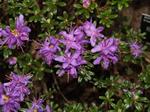 Tips for Growing Azaleas and Rhododendrons
- Check flowering time when you buy plants. Rhododendrons flower depending on species, variety and climate from late winter through spring and also in autumn. There are several hundreds of azalea and rhododendron cultivars to choose from. They vary in their mature size, flower colour, and flowering time..
- They thrive in well drained, rich, acid soils with a pH of around 4.5 to 5.5 and a high content of organic matter. Rhododendrons will not grow in soils that are too acidic with a pH value below approximately 4.3. Similarly, they will die in alkaline soils with a pH value above 6.5. Soils with higher or lower pH will need adjusting before planting.
- Rhododendrons do not fare well if they are excessively fertilised. It is therefore advisable to plant them away from plants which require frequent fertilising. Dry mix azalea foods should be administered sparingly. A light sprinkling can be applied to the soil as far as the outer foliage. For potted plants just one level teaspoon is enough for a 30cm pot, and less for smaller pots. Feed should always be watered in.
- In temperate climates deciduous and Kurume azaleas generally grow well in a cool partially shaded position. The ‘hardy hybrid’ rhododendrons do well outdoors but most of the perfumed species and taller species will only survive in milder areas or indoors. In warmer climates Kurumes and evergreen azaleas can be grown in dappled sunlight provided by planting beneath tall trees. Many species of these varieties will also grow in full morning sun. Some of the dwarf hybrids will thrive in full sun. In most cases, very shaded positions will result in leggy plants with less flower production.
- Potted rhododendron species should not be allowed to dry out. Those which are planted in open ground should be watered regularly particularly after new growth appears during the spring months and thereafter during the growth period. If foliage becomes droopy and lacking in vigour then watering should resolve this. Watering should be sufficient to penetrate the subsoil during long dry periods to avoid soil salts becoming concentrated around the surface roots. One should bear in mind that whilst these plants require moist conditions, they will not survive in continuously wet soil with poor drainage.