This is a unique study program, offering guidance from highly qualified and experienced horticultural experts. Some courses focus heavily on assessment, others are rigid in the services they offer-this course is all about learning (rather than just passing exams), and developing your capacity to grow vegetables for the situation you find yourself in. It is relatively flexible in many ways and offers you the opportunity to focus more heavily on that which is more important to your needs.
Tips for Growing Capsicums
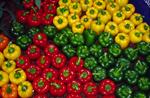
Capsicum crops inevitably produce better crops when fertilized; but the ideal quantities and proportions of nutrients applied can vary greatly from one soil to another, and depend upon environmental conditions and cultural techniques. Sandy soils therefore will need to be treated differently to loam soils.
Note: when too much nitrogen is used it can result in leafy plants with reduced yield. Too much potassium has been shown to reduce wall thickness without increasing yield.
The best way to determine the ideal requirements is to have the soil analysed by a laboratory, and based on that analysis, receive recommendations from an expert in soil science and crop production. This is often not possible or viable though.
Fertiliser can be applied before planting, and again as repeated dressings after planting as the crop grows
Traditional plantings are 15-30 cm (12-24 inches) between plants in a row, and 45-90 cm (18-36) inches between rows.
This spacing is not set fast though. For instance, in the sub-tropics, where humidity can become an issue and ventilation between plants can be therefore more important, a wider spacing has been used. Plants are grown as a row crop on raised beds, with two rows 1.5 metres apart to a bed and one plant every 40 cm in the rows. This will result in 27,000 to 30,000 plants per hectare (depending upon the distance between beds).
Typically, commercially grown peppers may take between 65 and 80 days from planting the plants, to when you harvest the first peppers.
Temperature Requirements
Sweet peppers (i.e. ‘bell pepper’ cultivars) grow best at temperatures between 21-24°Celsius (70-75° Fahrenheit).
Hot peppers (chilli types) include cultivars that grow just as well in warmer conditions. The optimum temperature range for hot peppers is 21-29°Celsius (i.e. 70-85° Fahrenheit).
Some experts recommend avoiding night temperatures below 18°C, others suggest anything below 16°Celsius is unwise. However if day temperatures rise above 32°C, there can be a problem with fruit setting; fruit will not set at temperatures under 15°C or above 32°C.
Protection from strong winds is necessary as peppers are brittle. Wind can also cause chilling in cold weather. Windbreaks might be needed for row crops on exposed sites. Rows of corn are sometimes grown for wind protection.
Plants are likely to burn and die in frost.
Fruit can suffer sun burn from direct intense sunlight when temperatures are low; shade may be required in mid-summer.
The plant can exhibit an under-supply of water, even when moisture levels in the soil are adequate especially if there is low humidity and high temperatures. This can result in water transpiring from the plant faster than it can be taken up through the roots, and when this happens water deficit can occur and that in turn results in abscission (i.e. dropping) of buds flowers and small fruits.
Light Requirements
Capsicums are more tolerant of some shade than many other vegetables. Shade is definitely advantageous when days are long and light intensity is high; but the value of shading crops also depends upon the cultivars being grown. Some like shade more than others, and even though shading is commonly used in some places, it is rarely used in many other places and is worth considering in the home garden when you plant this species.
Research in Poland has shown that plants grown under lower light intensities have higher levels of both chlorophyll and carotenoids, but slower growth rate.
When grown under lights (e.g. in greenhouses) 50,000 to 60,000 Lux (Lux is a standard unit of the measurement of light intensity) is recommended for bell peppers by some growers.
As a comparison outdoor sunlight averages ranges from 32,000 to 100,000 Lux.
Research in Mexico found that Capsicum annuum L. var. aviculare grows better and produces the heaviest crops, with full or near full sunlight in the morning, but shade in the afternoon.
Why Study With Us?
 Here at ACS we focus on learning because we recognise the importance of continually striving to improve your understanding, and the benefits it will bring to you, both now and into the future.
How Can This Course Help Me?
This course is designed to be of benefit to people who are interested in learning how to grow vegetables organically for the horticulture or agriculture industries. It will also be of value to those who are operating an existing vegetable growing business.
Take this course if you would like to:
- Find ways to improve an existing vegetable growing business.
- Enhance your employability in crops growing businesses.
- Improve your knowledge of horticultural and agricultural growing techniques.
- Grow vegetables on a small scale - either for home use or on a small property.
This course may be studied by itself or along with other 100-hour modules as part of a self-designed proficiency award, certificate or higher level qualification.