Be a Conifer Expert
Eight lessons provide you with a systematic understanding of the way conifers are classified, show you how to identify the differences between types and develop your understanding of cultural requirements common to the whole group and differences in cultural techniques needed for specific types of conifers. Sections of this course look in detail at trees (e.g. Pines, Cedrus, Spruce), small shrubs, medium shrubs, native conifers and rarer varieties.
Learn how to Grow and Use Conifer Plants: A correspondence course for the enthusiast or commercial grower.
Lesson Structure
There are 9 lessons in this course:
-
Introduction
-
Review the system of plant identification, general characteristics of the conifer plant group, information contacts you can use (ie: nurseries, seed, clubs, etc).
-
Culture
-
Planting, staking, mulching, watering, pest & disease, feeding, pruning, protection from wind, salt air, propagation, etc.
-
Trees
-
Conifers that reach tree proportions, their characteristics and requirements, how to grow conifers by seed propagation and grafting techniques.
-
Common Medium Size Shrubs
-
Many conifers fall into this height category. Some of the popular conifers are Chamaecyparis, Juniperus and Thuja. How to prune conifers.
-
Small Shrubs
-
How to choose small and prostrate conifers and their care. How to care for seedlings up to planting out stage.
-
Australian Native Conifers
-
Araucaria, Callitris, Podocarpus are three good conifers for use. The importance of environmental zones in Australia and how it can effect plant growth.
-
Rarer Conifers
-
Hemlocks, Podocarpus, Larches and leaf characteristcs of Cephalataxus.
-
Using Conifers
-
As timber, oils, edible seed, christmas trees, etc.
-
Landscaping with Conifers
-
Developed in conjunction with the Rural Industries Industry Training Board in Queensland and accredited from 1995-2000 as an Advanced Diploma Module. Notes are continually upgraded to maintain relevance to current and future needs.
Aims
-
Distinguish between different types of conifers in cultivation, including twenty-five different genera and fifty different varieties.
-
Specify the general cultural requirements of different conifer genera.
-
Determine specific cultural requirements for some commonly cultivated conifer species.
-
Specify specific cultural requirements for some lesser grown conifers, including Australian native and uncommon species.
-
Determine different commercial applications for conifers in horticulture.
-
Prepare a planting design using conifers.
Gardening Tips with Conifers
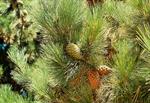
Conifers can provide us with a huge range of shapes, from tall, narrow trees, to conical shaped trees or shrubs, to prostrate, low growing types, to broad, domed shaped types and much more. They offer a huge range of colour variations, and a wide variety of foliage textures.
Whether you live in cool climates like Scandinavia or Alaska, or even warmer sub tropic or tropical climates (or anything in between), there are conifers that you can grow.
Traditionally conifers have been used for oils (skin care products), timber and even edible nuts. These days, however they are seen as offering many varied and exciting landscaping possibilities . Conifers can make excellent long living, screening plants, hedges or contrast plants. A huge range of dwarf, and low growing types are available, many of which make excellent ground covers or tub plants. Their ease of care makes them a favourite among designers and home gardeners.
Conifers do not require excessive care in terms of maintenance and pest control. Most simply require the following: do not over water, provide plenty of compost/mulch to maintain a cool root system, and trim lightly only, if at all, to maintain a neat appearance, unless you are using them for hedges, mazes, bonsai or topiary.
When grown in the cool parts, plants may be placed very close together. If planted in warmer districts, especially where humidity can be a problem, then plants should be spaced out to allow plenty of air movement between them, which helps in reducing plant diseases.
OTHER COURSES
If you are interested in conifers, we also offer other courses in trees that may interest you, such as
ARBORICULTURE/TREES/SHRUBS EBOOKS
We also offer a range of eBooks that may be of interest to you. Please visit our online horticulture bookstore.
You may find the following of particular interest –
Growing Conifers eBook - The great thing about conifers is they look good all year round. Most of them are grown for foliage, and in general, foliage remains the same pretty well all year. Unlike other trees and shrubs, you do not have a month of attractive flowers, followed by an obscure plant the remainder of the year. A brilliant blue of gold foliage conifer will be blue or gold month in, month out.
Growing Trees and Shrubs in Small Gardens eBook - This ebook is an essential guide for anyone who wants to make the most of a small garden, balcony, or courtyard. The psychological benefits of having living plants in your environment can not be underestimated. If you live in a city, an apartment or just a small cottage this ebook will help you re-connect with nature and make the most of your garden.
Trees and Shrubs eBook - Useful for students, or the tradesman already working in the field; or the home gardener; who needs a quick reference when choosing plants for a garden.
Trees and Shrubs For Warm Places eBook - Never before published! This ebook is a major reference work, 15 years in preparation, containing around 300 colour photos! It is a comprehensive guide to plants grown in any type of warm place – tropical, sub-tropical, greenhouses, and court yards that have become heat traps in temperate places.