ONLINE COURSE HOME VEGETABLE GROWING
ACS student comments:
Great course, tutor was really good with explaining and marking. [She] gave me new ideas for my garden and hints for it too. Learning so many new things about growing different vegetables, how to grow them and what to do. All about soils and garden plots. Kathryn Crossfield, Australia - Home Vegetable Growing
Even in today’s complex and technology-driven society the hunter-gatherer instinct is strongly present within most of us. Growing edible plants and creating beautiful garden spaces is a way that we can keep in touch with nature and the simpler joys of life.
Why grow herbs and vegetables?
Watching plants grow from seed to harvest and knowing that the armful of vegies and herbs you have just gathered for the evening meal will be on the table within an hour or two of harvest can be an exciting and satisfying experience.
There are lots of other reasons to grow vegies:
- You save money
- You have the satisfaction of being self sufficient
- You know what you are using (you can never be sure that purchased products are pure and uncontaminated)
- You have a reliable supply of preferred varieties.
- Your food is fresher
- Just for fun!
Lesson Structure
There are 8 lessons in this course:
-
Introduction
-
Cultivation and Planting
-
Review of Major Vegetable Varieties
-
Pest, Disease and Weed Control
-
Hydroponic and Greenhouse Growing
-
Lesser Grown Varieties and Herbs
-
Irrigation
-
Harvesting, Storing and Using Vegetables
Each lesson culminates in an assignment which is submitted to the school, marked by the school's tutors and returned to you with any relevant suggestions, comments, and if necessary, extra reading.
Aims
-
Identify a range of different vegetables
-
Determine sources and significance for information on vegetable growing
-
Describe the planting and cultivation of a range of different vegetables.
-
Describe production of some of the varieties of vegetable which are widely and commonly grown by home gardeners.
-
Evaluate and determine treatments for a range of common pest, disease and weed problems that affect vegetables
-
Determine and describe methods for producing a range of vegetable crops out of season.
-
Describe production of some of the varieties of vegetable which are less commonly grown by home gardeners.
-
Determine and describe ways of managing the water needs of vegetables in a home garden.
-
Describe when and how to harvest different types of vegetable crops.
-
Describe a range of methods for storing and using vegetables after harvest.
The most obvious reason to grow vegies or herbs is to harvest and use them but that isn’t the only reason. Many vegetables and herbs can be just as attractive or functional as the ornamental and amenity plants we grow.
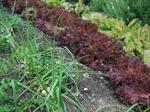
Using herbs and vegies for better visual impact is simply a matter of plant selection and arrangement. In the past, when almost every house was on a quarter-acre block, vegetables were grown in separate beds in the backyard, with each variety planted in neatly spaced rows. These days few householders have the space or time to devote to this style of gardening, so it makes sense to grow edible plants alongside ornamental varieties. For example, a bed of edible and ornamental plants could include perennial lettuces as edging plants, climbing peas on tripods, clumps of rainbow chard and leafy parsley for colour and texture, backed by a screen of sweet corn. There are endless possibilities of combinations – a task made easier each season’s release of exciting new compact and colourful varieties.
Vegetables and herbs can also be used to improve the backyard environment. Planting green manures and using organic mulches and composts will improve soil fertility and help to control erosion. Problem soils, such as excessively wet or dry soils, can also be improved by choosing varieties adapted to those conditions.
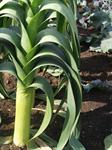
In a small but important way, growing vegetables will increase the biodiversity of your garden – the vegie patch will be a haven for bees, birds, lizards and other animals in need of food, water and shelter.
Can You Be Self Sufficient on an Average Home Site?
It’s possible to provide for many of your needs, but you may need to modify your expectations.
If you want every luxury that modern society can offer, then you are going to need more than what your garden can give you, but if you are prepared to be only part self sufficient or to live with less, then go for it.
What you produce from your garden will depend on the amount of space that you have. Obviously the larger the property, the more potential you will have to produce a large variety of crops. Large properties can support a range of fruit trees, vines, vegetables, herbs, grains and even hay and straw, as well as animals and chickens. The smaller the property, the more thought you will need to give to what you do and don’t grow. Ask yourself what would I like to produce? Then take it from there.
What can you make using produce from your garden?
Turning the produce into preserves and other usable items can be as much fun as the actual growing. For those who are looking to be self sufficient this is an extension of growing your own food, and a necessity to help you through winter and early spring, when fresh produce can start to dwindle.
Following is a short list of what you could consider making:
- Preserves
- Chutney
- Dried foods
- Oil
- Soap
- Cloth
- Fertiliser / compost
- Mulch
- Seed (for next year’s planting)
- Fruit juices
- Wine
Some of our Horticulture Tutors
Maggi Brown Cert.Ed.(Environment)
Maggi is regarded as an expert in Organic Growing throughout the UK, having worked for two decades as Education Officer at the world renowned Henry Doubleday Research Association (now Garden Organic). She has been active in education, environmental management and horticulture across the UK for more them three decades.
Yvonne Sharpe RHS Cert.Hort, Dip.Hort, M.Hort, Cert.Ed., Dip.Mgt.
Over 30 years of experience in horticulture, education and management, Yvonne hastravelled widely within and beyond Europe, and has worked in many areas of horticulture from garden centres to horticultural therapy. She has served on industry committees and been actively involved with amateur garden clubs for decades. Yvonne is also a member of the National Society of Allotment and Leisure Gardeners (NSALG).
John L. Mason Dip.Hort.Sc., Sup'n Cert., FIOH, FPLA, FAIH, MACHPER, MASA
Mr Mason has had over 40 years experience in the fields of Horticulture, Business, Education and Journalism. He has extensive experience both as a public servant, and as a small business owner. He has held positions ranging from Nurseryman and Landscape Designer to Director of Parks and Recreation (City of Essendon) and magazine editor.
John is a well respected member of many professional associations, and author of over forty books and of over two thousand magazine articles. Even today, John has written a number of best selling reference texts used by horticultural courses at universities and colleges internationally. His publishers include Simon and Shuster, and Landlinks Press (CSIRO Publishing
Dr. Lynette Morgan B. Hort. Tech., Ph.D. in Horticultural Science Dr Morgan has a broad expertise in horticulture and crop production, and a keen appreciation of the global scene. She travels widely as a partner in Suntec Horticultural Consultants, and has clients in central America, the USA, Caribbean, South East Asia, the Middle East, Australia and New Zealand.
Gavin Cole B.Sc., Psych.Cert., Cert.Garden Design, MACA
Gavin has over 20 years of industry experience in Landscaping, Publishing, Business and Psychology. He was operations manager for a highly reputable British Landscape firm (The Chelsea Gardener) before starting up his own firm. He has exhibited at Chelsea Flower Show, and designed gardens across England and Australia. He spent the best part of three years working in our Gold Coast office, partly as a writer for Your Backyard (gardening magazine), and partly as a tutor in both psychology and horticulture.
Martin Powdrill, Bsc (Hons) Applied Science (Resources Option), MSc Computer Studies, Permaculture Design Certificate. Martin’s goal as a catalyst for sustainable change brings together his strengths and experience in his environmental, project management, and business backgrounds. For 25 years, Martin has been involved in Telecommunications, IT, Organisational Development, and Energy Conservation & Efficiency, prior to setting up his own Permaculture consulting business. He wishes to make a real difference to people and the planet, by actively bringing new perspectives to current challenges and exciting opportunities. To realise this, he enables diverse groups of people to flourish and release their untapped potential, by re-igniting their passion and creativity. Additionally, Martin volunteers with many local environmental and community groups, and facilitates discussions on climate change, peak oil, and transition towns. Martin has an allotment, and is currently enrolled in the Scottish Mountain Bike Leader Award programme.
Rosemary Davies Dip Hort Sc. Rosemary trained in Horticultural Applied Science at Burnley, a campus of Melbourne University. Initially she worked with Department of Agriculture Victoria as an extension officer (Garden Advisory Service), taught horticulture students, worked on radio with ABC radio (clocking up over 24 years as a presenter of garden talkback programs, initially the only woman presenter on gardening in Victoria) and she simultaneously developed a career as a writer. She is author of several booka and hundreds of articles.
Diana Cole B.A. (Hons), Higher Dip. (Garden Design), RHS Advanced Cert. Horticulture, Cert Admin.Mgt., Dip. Inst. Personnel Management In addition to her RHS horticulture, garden design, City & Guild construction, NPTC pesticide/legislation and business/management qualifications, Diana has a variety of skills drawn from setting up Arbella Gardens, a landscape gardening business. She also has administrative, management and training delivery experience drawn from her employment in other organisations such as the NHS and other educational institutions such as schools & universities. She has augmented her training expertise having gained the Preparing to Teach in the Life Long Learning Sector qualification. She also has experience gained through working as a volunteer in a number of different roles including amenity style gardening in parks and practical conservation work. Diana is also a member of the National Society of Allotment and Leisure Gardeners Limited (NSALG).
Who are our tutors?
Our tutors are all highly experienced and professional, knowledgeable in their field of study. We have staff from around the world, enabling us to gain a wide variety of perspectives. We have a school in the UK and in Australia. If you would like to have a look at our tutors, then click on the “About Us” in the boxes above and choose “The Staff” option.
Sample Course Notes
Our courses are all written by highly qualified tutors and writers, who also teach on the courses, so know them well. We strive to update our courses and improve them with new information, methods and knowledge on an ongoing basis. If you would like to see examples of some of our courses, then choose the “Enrolment” option above, and then click on “Sample Course Notes”.
What learning method should I choose?
We offer three learning methods – e-learning, correspondence and online. If you are not sure which is the right choose for you, then click on the “Learning” box above, then “Learning Methods.”
How Long will it take to complete the course?
This obviously varies from student to student. Some students will have more time for study than others. Some students may work quicker than others, so it is an individual thing. We estimate that most students will take, for example, 4 – 6 months to complete a 100 hour individual module, but we allow up to 12 months for you to complete it.
Longer courses will obviously take longer. You can find more information on the length of time required and so on the “Enrolment” box, then selecting “Terms and Conditions of Enrolment.”
What Do Our Students think of us?
If you would like to read comments from our previous students, then choose the “About Us” option above, then “Student Testimonials”.
I don’t think this is the right course for me.
If you’re not sure about this course, then why not look at our wide range of other courses. Click on the “Courses” box above.
You may also wish to design your own course to fit in with exactly what YOU want. To do so, click on the “Enrolment” box, then “Design your Own Course”.
If you would like more advice on a course, then you can contact us and ask a tutor about the courses. You can contact us by calling 0800 328 4723 or +44(0) 384 442752 or emailing info@acsedu.co.uk
Recognition and Accreditation
For more information on our recognition and accreditation, click on “The School”, then “Recognition”.
Who is ACS Distance Education?
If you want to know more about ACS and our history, then please click on “The School”, then “About us.”
For books related to this subject click here to visit the online bookshop