BECOME SELF SUFFICIENT NOW
A unique qualification which may be undertaken with a view to preparing for a change in the way you live or perhaps in preparation for establishing a business or career providing services to the community in this discipline.
The course develops skills in producing your own day to day products using low cost, environmental friendly practices. The Certificate covers (but is not limited to):
-
mud brick building,
-
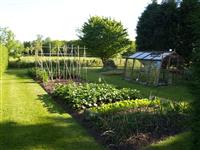
growing fruit and vegetables, herbs and other crops organically,
-
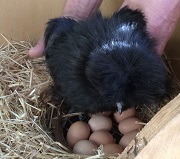
raising poultry, sheep and goats,
-
nutrition and creating a balanced diet,
-

alternative energy supplies,
-
permaculture, and sustainable agriculture
-
alternative energy.
“This is a certificate level course that provides the skills to earn extra income as a consultant in this field. Be self-sufficient and earn money too.” - Adriana Fraser Cert.Hort., Cert.Child Care, Adv.Cert.App.Mgt., Cert 1V Assessment and Training, Adv.Dip.Hort., ACS Tutor.
Modules
Note that each module in the Qualification -Certificate In Self Sufficiency is a short course in its own right, and may be studied separately.
Compulsory Modules
 Self Sufficiency I covers ten lessons which develop your understanding of self sufficiency, food and nutrition, and making the right decisions about changes in lifestyle; as well as showing you how to do a whole range of practical things such as mud brick building, making crafts, growing fruit, vegetables, herbs, and other crops; raising poultry, sheep & goats, extending the life of clothing, conserving energy, recycling, simple home medical care and first aid, and lots more.
In Self Sufficiency II you learn to be self sufficient with your food. You learn about nutrition and how to balance your diet, as well as how to produce, process, store, and use different types of food. This includes berries, nuts, milk, cheese, eggs, bread making, preserves, & dried food. Cooking, freezing, drying, bottling, making bread, planning a vegetable garden to give produce all year round, and lots more are covered over ten lessons.
More on the Core Units -
Self Sufficiency I
There are 10 lessons in this course:
- Understanding the possibilities
- Health, Nutrition and Clothing
- Horticulture - Fruit and Vegetables
- Horticulture - Herbs
- Animal Husbandry - Poultry and Bees
- Animal Husbandry - Grazing Animals & Pigs
- Building - Earth & Mud Buildings
- Appropriate Technology/Alternative energy
- Craft & Country Skills
- Making Decisions - Small Scale Production, How To Make Decisions.
Each lesson culminates in an assignment which is submitted to the school, marked by the school's tutors and returned to you with any relevant suggestions, comments, and if necessary, extra reading.
Self Sufficiency II
There are 10 lessons in this course:
- Diet & Nutrition
- Establishing A Kitchen Garden
- Vegetables
- Fruit
- Bottling
- Freezing & Drying
- Producing Milk & Eggs
- Growing & Cooking Herbs
- Egg & Cheese Cookery
- Grain
Each lesson culminates in an assignment which is submitted to the school, marked by the school's tutors and returned to you with any relevant suggestions, comments, and if necessary, extra reading.
Aims
- Explain the importance of good diet and nutrition to good health
- Discuss the potential for increasing self sufficiency by growing your own food in a kitchen garden.
- Describe the potential and appropriate procedures for vegetable growing in your area.
- Describe the potential for fruit growing and appropriate fruit growing procedures for your locality.
- Describe the process of practices like bottling to extend the shelf life of produce.
- Explain the process of practices like freezing and drying to extend the shelf life of produce.
- Describe the principles of animal production and processing animal products, where someone is seeking to improve dietary self sufficiency.
- Describe growing and cooking with herbs, where someone is seeking to improve dietary self sufficiency.
- Describe the use of eggs and cheese where someone is seeking to improve dietary self sufficiency.
- Describe the use of grains in a situation where someone is seeking to improve dietary self sufficiency.
How to be Self Sufficient
To be self sufficient requires a peculiar blend of three things:
a) Practical knowledge and skills.
b) Management or organisational skills.
c) A readiness to compromise. You may need to compromise to achieve a balance between the things you would like to have and the things you are able to provide yourself with. A self sufficient lifestyle might make you less dependent on society, but this might only be possible at the expense of giving up some of society’s luxuries.
To become self sufficient, you must be selective in the goods and services you choose to supply yourself with. It involves doing those things which yield greatest benefit in relation to the time, money and materials you need to spend on producing the goods or service.
The way you physically organise your property and living space (both inside and out) as well as the way you organise your time, are vital factors in improving your level of self sufficiency.
How Can Food be Stored and Preserved?
Growing vegetables, fruit, eggs and other foods is just one side of food self sufficiency. If you really want to improve your self sufficiency, you need to also learn how to preserve it, so that what you grow can be used throughout the whole year.
Consider Meat Preserving, for Example
Meat preserving has been done for thousands of years and today we see a rise in the popularity of meats which have undergone home preservation techniques.
Meat will spoil as microbial activity begins decomposing the tissue. Some microbes can be dangerous to human health, while others are simply going to destroy the meat. All microbes need a certain level of water in the meat to function, therefore the chief way of preserving meat is to reduce the level of water to a point where microbial activity is inconsequential.
Meat can be preserved lots of different ways.
- Curing – adding salt, sugar, nitrite and/or nitrate
- Drying – can be done rapidly in low heat ovens, or slow dried
- Smoking – gives the meat the smoky flavour characteristically
- Freezing -either fresh or cooked meats can be frozen.
- Combinations of the above.
Curing Meats (Salts, Sugars or Nitrates)
Curing meat involves processes to extend the period of storage. Usually this involves lowering moisture in the meat and often using additives or preservatives which inhibit decomposition or microbial growth by plasmolysis. The addition of salt over the surface of the meat draws the moisture out of it evenly through the process of osmosis. It is known that the growth of undesirable organisms can be inhibited at relatively low concentrations.
Dry salting is sometime referred to as corning.
Many salt cures are not sufficient at allowing the meat to remain at room temperature without Clostridium botulinum spores being a risk, therefore it is suggested that nitrate or nitrite curing can assist in the process to inhibit the growth of this potentially life threatening bacterial infection.
The process of curing can also be used to improving, intensifying or adding flavour in meat. Sugar is often used to reduce the harshness of saltiness in cured meat and enhance sweetness of the product.
If you want to carry out the salt curing process at home you can try the following few simple steps. The process in simple terms is:
- Salt is rubbed into the meat and it is left for a week or more in a cold place (e.g. refrigerator).
- Meat is then rinsed, briefly air dried, then wrapped in cheesecloth.
- It is then hung in a cool place (never above 20 degrees C), for at least 2 weeks before eating.
Drying Meat
Indigenous people have air dried meats for hundreds of years. They have often used lean meat cut thinly into strips. This product is ready to consume when the texture becomes hard after hanging in the sun.
Making dried strips of meat (e.g. beef sticks) involved firstly salting, then drying in ovens at 70-80 degrees C.
Smoking
One of the original food preservation methods, probably the main way before refrigeration.
In smoking, hot or cold, it is normal to hang the meat in closed environment such as a homemade or store bought smoker. A great example of a smoker is the Tennessee smoker. A small fire or hot coals are used to generate smoke. This is placed near the hanging or rack held meat. It is important to ensure as little smoke escapes from the smoker as possible as this is considerably wasteful of the product used.
Cold smoking is a technique used when the meat still needs to be refrigerated which allows for smoking to take place over longer time periods. In this technique, the smoke filled chamber itself remains cold during the smoking process, whilst the meat remains uncooked.