Gain practical soil management skills
- Learn about soils and how to improve the soil quality.
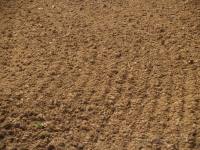
- Soil is the foundation for profitable farming.
There are many things that can be wrong with soil (eg. poor nutrition, chemical imbalance, structural problems such as drainage, lack of microbial life). Often minor and relatively inexpensive treatments can make a huge difference to productivity, but the problems need to be identified first, and that requires a solid understanding of soil theory and management practice.
Lesson Structure
There are 8 lessons in this course:
-
Introduction: Soils And Soil Classification
-
Soil health and Agricultural soils
-
What is soil health?
-
Soil Composition and Formation
-
Classifying Soil Groups and Soil Landscapes
-
Soil Profiles
-
Soil Horizons
-
Key Properties of Selected Soil Groups
-
Parent Materials
-
Classifying Soils According to Hydrological Properties
-
Soil hydrology Groups: Uniform Coarse-textured Soils, Permeability Contrast Soils; Cracking Clays; Medium to Fine Textured soils
-
Properties of Soils and Plant Nutrition
-
Understanding Soils
-
Mineral and Rock
-
How Soils Develop Naturally
-
Mechanical Weathering
-
Chemical Weathering
-
Geo-chemical Weathering Processes
-
Pedo-chemical Weathering
-
Soil Fertility and Plant Nutrition
-
Organic Carbon
-
Soil Colour
-
Texture and its Effect on Plant Growth
-
Structure and its Effect on Plant Growth
-
Consistence and its Effect on Plant Growth
-
Depth of Profile and how it Relates to Plant Growth
-
PH and Plant Growth
-
Porosity and Plant Growth
-
Plant Nutrition and Nutrient Toxicity
-
Soil Testing Methods
-
Tilth and Organic Matter
-
Soil Sampling for Chemical Analysis
-
General Principles of Soil Analysis
-
Tools for Field Sampling and Soil Investigation
-
Digging a Sample Pit or Hole
-
Finding Out about your Soil
-
Settlement Activity
-
Soil Structure Activity
-
Recording Soil Colour
-
Testing Consistence
-
Describing Texture
-
Test for Free Carbonates
-
Soil pH Testing
-
Stability of Clods to Wetting (Slaking and Dispersion)
-
Bulk Density Testing
-
Measurement of Organic Matter Content of Soil
-
Measuring Salinity
-
Measuring Water Content
-
Fertiliser Solubility
-
Affect of Lime on Soil
-
Laboratory Testing of Soils
-
Land Degradation and Other Soil Problems
-
Soil Structure Decline
-
Water Repellence
-
Erosion
-
Hard-Layers in Soils
-
Transient Bonding; Compaction; Cementation; and Natural Rigidity
-
Sub-Soil Compaction: Compression, shearing and smearing
-
Soil Acidification
-
Alkalinity and Sodicity
-
Water-logging
-
Salinity
-
Chemical Residues
-
Soil Management on Farms
-
Conservation Farming
-
No-Tillage (Zero tillage)
-
Minimum Tillage
-
Trap Cropping
-
Cover Crops and Green Manure Cropping
-
Alley Farming (AF)
-
Contour Farming and Strip Farming
-
Controlled Traffic Farming
-
Stubble Management
-
Establishing Water and Nutrient Management Plans
-
Soil Conservation Earthworks
-
Integrated Pest Management
-
Direct Drilling in Pasture Establishment
-
Soil Management in Orchards
-
Soil Management in Market Gardens
-
Crops: Soil and Nutrient Requirements (Part A)
-
Crops: Soil and Nutrient Requirements (Part B)
-
Narrow-Leafed Lupins
-
Canola
-
Faba Beans
-
Grapes
-
PBL Soil project - Soil Investigation and Report
-
evaluate a range of soils for a given situation
-
determine soil problems or limitations that exist for a given land use
-
prepare and present a report
Aims
-
Develop a broad understanding of the physical and chemical properties of soils.
-
Develop strong understanding of soil science and its impact on plant growth.
-
Develop skills in sampling and field testing soils for basic physical and chemical properties
-
Understand the principles, methods and techniques of sustainable soils management.
-
Understand the principles and practices of earthworks.
-
Understand causes and remediation methods of land degradation and soil problems.
-
Develop a broad knowledge in the use of growing containers for agriculture.
-
Develop strong understanding of soil science and its impact on plant growth.
-
Develop practical knowledge about managing soil for particular cropping uses.
Learn to Manage Different Soils
Soils can vary a great deal over a small area, even on a single farm. Often the soils on a slope or on top of a small hill can be very different to soil in a valley or gully.
These variations can be both in physical characteristics and in the soil chemistry. Some soils can be even textured, and others may not be so even. Some absorb and hold moisture better than others. Some contain a lot of nutrients, and others do not. These and so many other factors need to be understood by a farmer if the farm soils are to be managed effectively and farm production optimised. This course will allow your to undersatand such things, and develop the depth and breadth of your knowledge and capability to manage different parts of a property appropriately, according to soil variations across the property.
Consider Uniform Coarse-Textured Soils
Soils in this group have low runoff potential when thoroughly wet. Water is transmitted freely through the soil. They are usually deep soils, but if shallow often overlie a substrate which is semi-permeable to water. The uniform coarse-textured soils are free-draining soils with a poor capacity to hold water and nutrients. They are usually deep, with the soil profile often extending to more than 2m.
Hydrology
Following rain the wetting front gradually moves through the soil profile. These soils do not reach relatively steady moisture content until 24 to 48 hours after a significant rainfall event, because water continues to drain through the profile. Deep drainage below the root zone can be frequent and extensive. Soil water can drain rapidly below the root zone unless there are actively growing plants. High rates of recharge are expected on highly leached coarse - textured soils with very low water storage and where physical or chemical properties limit root growth.
Infiltration
Water entry is rapid unless the surface soil is water repellent. A water repellent surface will result in redistribution of water within the profile and can also cause significant runoff and erosion during summer storms.
Water storage
Low to very low water storage capacity (20 to 80mm/m), which means crops or pastures are subject to moisture stress when rainfall is irregular.
Environmental factors
These soils are highly susceptible to wind erosion as most uniform coarse-textured soils have a loose, single grain surface. Maintaining an adequate ground cover is a priority at all times. Water erosion is generally minor because there is minimal runoff unless the soils are water repellent. Nutrient pollution of groundwater, especially with P, is a major concern as the nutrients may contribute to eutrophication of rivers, estuaries or wetlands.
Land use considerations
Suitable crops or pasture species should have a deep root system to take advantage of the large volume of soil and to minimise moisture stress and deep drainage. These soils are not suitable for crops with stubble that is easily detached and removed by wind, leaving the soil surface bare.
Not all soils are Uniform or coarse in texture though. If a soil is a finer texture, or less uniform; there it's
hydrology,infiltration, water storage and environmental factors will be different. You need to understand that -and so much more. This course is an excellent way for you to develop that understanding.