Learn How to Grow Vegetables Successfully in a Range of Situations
" I have never found the staff at any other learning institution as supportive as the staff at ACS. This gives one a lot of peace of mind and confidence to go on - at every squeak from my side, you guys have always been there, immediately to sort me out. The feedback on my lessons has always been really good and meaningful and an important source of my learning. Thanks!..."
(Comment from a Student with ACS)
This is a very sound 100-hour foundation course in general vegetable production.
- Learn how to grow vegetables Correspondence Course studies: self paced distance education.
- Develop skills and knowledge required for commercial vegetable production, including a variety of production methods.
Note: This course may be studied as an alternative to Commercial Organic Vegetable Growing but not as well as this course since the two courses do overlap in content.
Lesson Structure
There are 8 lessons in this course:
-
Introduction to Vegetable Growing
-
Making the farm Pay
-
Understanding economic principles -supply and demand, scale of economy, etc.
-
Planning for the farm
-
Production planning
-
Financial planning and management
-
Land care and land management
-
Marketing
-
Personal welfare
-
Risk management -spreading risk, quality management, contingency planning, liquidity
-
Creating a sustainable farm enterprise
-
Planning for sustainability
-
Planning for drought
-
Crop selection
-
Monocultures
-
Alternating crops, broad acre or row crops
-
Growing Brassicas -Cabbage, Cauliflower, Brussels Sprouts, Pak Choi, Broccoli, Radish, Turnip
-
Growing Legumes -Beans, Broad Beans, Peas
-
Growing Lettuce, Onions, Potatoes
-
Cultural Practices for Vegetables
-
Explain general cultural practices used for vegetable production.
-
Crop rotation
-
Soils
-
Plant foods
-
Cover Crops
-
Legumes and inoculation
-
Growing various cover crops -Barley, Buckwheat, Canola, Lucerne, Field pea, Lupins, Oats, Sorgham, Clover, etc.
-
Ways of using a cover crop
-
Cultivation techniques
-
Compost
-
Crop Scheduling
-
Planting Vegetables -seed, hybrid seed, storing seed, sowing seed
-
Understanding Soils
-
Dealing with Soil Problems
-
Plant nutrition and feeding
-
Pest, Disease & Weed Control
-
Weed control -hand weeding, mechanical, chemical and biological weed control methods
-
Integrated Pest Management
-
Non chemical pest control
-
Understanding Pesticide labels
-
Understanding the law in relation to agricultural chemicals
-
Plant Pathology introduction
-
Understanding Fungi
-
Understanding insects, virus and other pathogens
-
Insect control -quarantine, clean far5ming, chemicals, biological controls
-
Review of common diseases
-
Review common pests
-
Review common environmental problems
-
Review common weeds
-
Hydroponic and Greenhouse Growing
-
Introduction to hydroponics
-
Types of systems
-
Nutrient solutions
-
NFT and other systems for vegetable production
-
Growing in a greenhouse (in the ground or hydroponics)
-
Components of a Greenhouse System
-
Types of Greenhouses and common greenhouse designs (venlo, mansard, wide span, multi span, poly tunnel, Sawtooth, Retractable roof, etc)
-
Shade houses, Cold Frames
-
Environmental Control -heating, ventilation, lighting, etc
-
Controlling moisture (misting, fog, etc)
-
Review of various vegetables -Cucurbits (Cucumber, Melon, Pumpkin, Watermelon, Zucchini)
-
Growing Selected Vegetable Varieties
-
Determine specific cultural practices for selected vegetable varieties.
-
Tropical Vegetables - Sweet Potato and Taro
-
Less common vegetables - Globe Artichoke, Jerusalem Artichoke, Asparagus, Chicory, Endive, Garlic, Leek, Okra, Rhubarb
-
Other Crops -Beetroot (Red Beet), Capsicum, Carrot, Celery, Sweet Corn, Eggplant, Parsnip, Spinach
-
Irrigation
-
Water and Irrigation
-
Infiltration
-
Internal Drainage
-
Flood, Sprinkler and Trickle irrigation
-
The objective of irrigation
-
Transpiration and Wilting Point
-
When to irrigate Timing irrigations
-
Detecting water deficiency or excess
-
Understanding soil moisture
-
Pumps, sprinklers and other equipment
-
Water hammer
-
Improving Drainage
-
Managing erosion
-
Harvest & Post-Harvest
-
Introduction to harvesting
-
Post harvest treatment of vegetables
-
Cooling harvested produce
-
Harvesting tips
-
Storing vegetables
-
Marketing Vegetables
-
Introduction
-
Standards for cost efficiency, quality and quantity
-
Options for Marketing Produce
-
Market Research
-
How to sell successfully
Aims
-
Select appropriate vegetable varieties for different situations.
-
Explain general cultural practices used for vegetable production.
-
Explain the management of potential problems, including pests, diseases, weeds, and environmental disorders, in vegetable production.
-
Explain alternative cultural techniques, including greenhouse and hydroponic production, for vegetables.
-
Determine specific cultural practices for selected vegetable varieties.
-
Determine the harvesting, and post-harvest treatment of different vegetables.
-
Develop marketing strategies for different vegetables.
What You Will Do
-
Compile a resource file of sources of information regarding vegetable varieties.
-
Describe the classification of different vegetables into major groups.
-
Prepare a collection of plant reviews of different vegetable varieties.
-
Determine three appropriate cultivars from each of different species of vegetables to be grown on a specified site.
-
Prepare a planting schedule of vegetable varieties, to be planted over a twelve month period, in your locality.
-
Differentiate between soil management practices for different vegetable varieties.
-
Explain the establishment of vegetables by seed.
-
Explain how to establish three different vegetables from seedlings.
-
Prepare a table or chart showing the planting distances, and planting depth of seed for different vegetable varieties.
-
Describe the application of pruning techniques to the production of specified vegetables.
-
Prepare a crop schedule (ie. production timetable) for a specified vegetable crop.
-
Prepare a pressed weed collection of different weeds.
-
Differentiate between different specific techniques for weed control in vegetable crops, including different chemical and different non-chemical methods.
-
Determine pest and disease problems common to different specified types of vegetables.
-
Identify appropriate control methods for the pest and disease problems you determined (above).
-
Develop pest and disease control programs, for the lifespans of different vegetables.
-
Determine the environmental disorders occurring with vegetable crops inspected by you.
-
Explain the methods that can be used to prevent and/or overcome different environmental disorders affecting vegetables.
-
Determine the potential benefits of greenhouse vegetable production in a specified locality.
-
Differentiate between the characteristics of different types of greenhouses.
-
Compare vegetable growing applications for different environmental control mechanisms used in greenhouses, including:
-
Different types of heaters
-
Shading
-
Lighting
-
Different types of coolers
-
Vents
-
Fans
-
Describe how a specified commercial vegetable crop might be grown in a greenhouse visited by you.
-
Compare vegetable growing applications for the major types of hydroponic systems:
-
Open and closed systems
-
Aggregate
-
Water
-
Aeroponic culture
-
Determine reasons for choosing to grow vegetables in hydroponics rather than in the open ground.
-
Explain how a specified vegetable can be grown in an hydroponic system.
-
Determine two commercially viable varieties suited to growing in a specified locality, from each of the following different types of vegetables:
-
Brassicas
-
Cucurbits
-
Tomatoes
-
Lettuce
-
Onions
-
Potatoes
-
Legumes
-
Determine specific cultural requirements for growing each of the vegetable varieties selected (above) on a specified site.
-
Describe the culture of less commonly grown vegetables chosen by you.
-
Produce a log book, recording all work undertaken to grow a crop of different vegetable varieties, suited to your locality.
-
Describe different harvesting methods, including both manual and mechanical techniques, used in vegetable production, for specified vegetables.
-
Identify the appropriate stage of growth at which different types of vegetables should be harvested.
-
Evaluate commonly used harvesting techniques of vegetables.
-
Evaluate commonly used post-harvest treatments of vegetables.
-
Determine post-harvest treatments to slow the deterioration of different specified vegetables.
-
Develop guidelines for post harvest handling, during storage, transportation and marketing, of a specified vegetable variety.
-
Analyse vegetable marketing systems in your locality.
-
Explain the importance of produce standards to marketing in different vegetable marketing systems.
-
Explain the impact of quarantine regulations on transport of different types of vegetables, in your locality.
-
Explain an appropriate procedure for packaging a specified vegetable for long distance transport.
-
Develop marketing strategies for different specified vegetables.
Tips for Growing some Vegetable Varieties
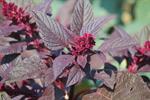 Amaranth (Amaranthus spp.)
Amaranthaceae Family
- Also called Chinese spinach, Indian spinach
- Annual herbs; some are grown for their foliage; others are grown for their seeds.
- Growing conditions: Soil with high organic matter content and a sunny position preferred. Will tolerate pH from 5.5 to 7.5.
- Nutrient requirements: Side dressing of nitrogen will promote active growth. Additional potassium may be needed for some soils
- Use: Amaranth was traditionally used by Aztecs both for food and as a ritual item. Some species are grown for their foliage, which is used as a green vegetable. Other species are grown for seed, which are used to produce drinks, sweets, flour and gruel.
Artichoke (Chinese) (Stachys tuberifera)
Lamiaceae Family
Chinese artichokes are rarely seen these days, and for this reason both tubers and seed are difficult to obtain. Tubers have a corkscrew shape and have a pleasant watery flavour.
- Growing Conditions: Chinese artichokes prefer full or filtered sunlight, otherwise they tolerate a wide variety of conditions
- Culture: They grow well in poor soils, and do not generally need feeding. In particular avoid nitrogenous fertilisers. Excess fertilisers will result in excessive foliage and poor tubers. Heavy or compacted soils should be well cultivated to improve tuber/root penetration. The tubers can be stored in the ground over winter or in a dark room. 3-4 plants are required to supply an average family.
- Companion Plants: Avoid planting with legumes, as the nitrogen fixed into the soil by the legumes could result in excess foliage growth.
- Propagation: Tubers planted in winter. Seed sown in spring.
- Pest and Disease Problems: Usually few pest and disease problems.
Use:
The tubers of Chinese Artichokes are eaten boiled. They should not be harvested until the plant has died back. Do not expose the tubers to sunlight as they will rapidly deteriorate.
Artichoke (Globe) (Cynara scolymus)
 Asteraceae Family
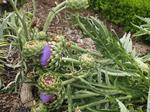
A herbaceous perennial reaching a height of 1-1.6m tall, with large coarse serrated or lobed leaves to 1m long, and large grey-green flower heads that turn violet-purplish in colour as they ripen.
- Growing Conditions: An open or protected position, in full or filtered sun is preferred. They will withstand some frost.
- Culture:Globe artichokes are tolerant of most soil types, but prefer sandy loam with some moisture and plenty of organic matter. Water stress can cause edible buds to drop. The soil should be prepared by planting a legume cover crop (eg. lupins or beans), or by digging in organic matter and lots of manure 1-4 weeks before planting (the fresher the manure - the longer the wait before planting). Plant in raised beds, or into mounds, to improve drainage. In humid areas, or very wet climates, space plants well apart, and prune if necessary, to allow plenty of ventilation to help control fungal diseases.
- Mulch heavily to control weeds. Apply nitrogen fertilisers periodically. In frost prone areas, winter protection may be necessary. Plants take 18 months to mature and will last for around five years.
- Companion Plants: Nasturtiums can be planted nearby to attract aphids away from the crop. Intercrop with peas or beans to improve soil nitrogen.
- Propagation: Usually propagated by planting suckers (offsets) from established plants about 60cm apart in rows, with about 1 - 1.2 metres between rows, in spring. Seedlings can also be planted deeply into the soil, the plants well mulched, and then any suckers that appear are removed and planted out or discarded. Seedlings and newly planted suckers may need some frost protection until established.
- Pest and Disease Problems: Pests include aphids, nematodes, caterpillars, leafminers and rodents. Diseases include fusarium, botrytis and virus. Spray heavy infestations of aphis or caterpillars with natural garlic or pyrethrum, daily until controlled. Virus-infected plants (ie. showing distorted, discoloured, abnormal foliage) should be immediately removed and burnt.
Use: The bottom part of the plant, the flowers, and side buds can be eaten raw, or boiled or fried. Harvest from spring to summer. Side buds and flower heads should be picked before they begin to open, taking a small section of stem as well. At least 3-4 plants are required to supply an average family. As well as being delicious this plant is well suited to use in the ornamental garden.
Artichoke (Jerusalem) (Helianthus tuberosus)
Asteraceae Family
A herbaceous sunflower-like plant from 1.8 - 4 metres tall, with grey foliage, and large potato-like tubers that have a sweet nut-like taste. Their flowers are large and colourful.
Growing Conditions: Jerusalem artichokes prefer a sunny position, with day temperatures of between 19-27°C, and do not like excessive heat. They are very frost hardy.
Culture: Most soils are suitable, but they should be heavily manured and fertilised before planting. Extra applications of sugar waste or bone dust may be valuable as phosphorus is very important. Adjust pH to around 6.5 by adding lime to offset the affect of any manure or organic matter. Soil should be mounded around plants as they develop. The growth of Jerusalem Artichokes should be controlled as they can spread rapidly. Shading may be necessary in hot climates.
Companion Plants:Wormwood may deter slugs and snails.
Propagation: Plant tubers in winter or spring, at 30 cm spacing and 60 – 100 cm between rows, when weather is reaching daily maximums between 15°C and 18°C. The tubers can be planted as for potatoes, with cleanly cut sections of tuber each containing one or more shoots (eyes).
Pest and Disease Problems: Jerusalem artichoke is a very hardy plant, with usually few pests except for occasional slugs and snails.
Use: The tubers are a nutritious (vitamin rich), low calorie, starch free, substitute for potatoes. They can be left in the ground, and lifted as required. They will not store well once lifted. Don't eat sprouting tubers. Harvest 4 weeks after flower buds start. About 10 plants are required to supply an average family. Some people claim that this vegetable causes flatulence.
Asparagus (Asparagus officinalis)
Liliaceae Family
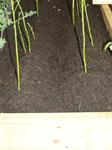 A deep-rooted herbaceous perennial to around 2 m tall, with fine feathery foliage that is grown for the very tasty new shoots (or spears) that emerge from a crown rhizome beneath the soil in early spring. The foliage may turn attractive shades in autumn before dying back.
Growing Conditions:Asparagus prefers full sun, and grows best in temperate areas. Is has been known to grow successfully in the subtropics in Australia.
Culture: A well drained, but moist, very fertile soil is necessary for good crops. If drainage is poor, plant in raised beds. Prepare the soil by digging a trench 30-35 cm deep, spreading rotted manure to 15 cm deep in the bottom, then covering the manure with a thin layer of soil. This will leave an open trench about 15 cm deep and 25 cm across, which crowns can be planted into. Cover the crowns with about 7 cm of soil and continue to back fill the trench as spears grow. Once established, the same plants continue to produce for many years. Weed control and regular feeding is important to keep the plants healthy and producing. After the harvest is finished each year, it is valuable to grow a cover crop of legumes (eg. soybeans). In areas with cool winters the crowns can be mulched to provide some protection against cool temperatures. The foliage should be left to act as additional mulch. In early spring each year ridging should be carried out (ie. soil is dug from between the rows of asparagus and thrown up on top of where the plants are growing). This provides a drainage channel in between the rows and increases the depth of soil above the plant. (NB: The spears become stronger and thicker by emerging through a greater depth of soil.) This also helps to keep the crowns covered as they tend to grow upwards in the soil.
Companion Plants: Comfrey may lure snails away from asparagus. Wormwood may also deter slugs and snails, but if too close it may compete for both nutrients and light. Some growers suggest that parsley makes asparagus grow faster, perhaps by penetrating the soil and allowing the asparagus in turn to grow deeper.
Propagation: Sow seed late winter, plant crowns mid to late winter in temperate areas.
Crowns can be planted about 45 – 50 cm apart in rows, with at least 1.2 m between rows. Plants grown from seed may take in excess of two years to produce a crop.
Pest and Disease Problems: Snails and cutworms are common problems. Sprays of Bacillus thuringiensis (eg. Dipel) will help control cutworms. Poultry (eg. chickens, guinea fowl and ducks) released into an asparagus patch occasionally will clean up pests.
Use: Do not harvest any spears from the first season of seedlings. If growing two-year-old crowns, or if seedlings are two years of age, only harvest 30-50% of the spears at most. In the third year you may harvest up to 80%. Cut below soil level to a depth of around 15cm to harvest. Asparagus are high yielding plants and may need to be harvested daily during peak growth. Spears can be frozen, eaten raw, and cooked in a variety of ways. Fresh asparagus steamed or boiled and served with butter, pepper and salt can be a delicious meal. Alternatively, elaborate French-style soups and other dishes can be made with asparagus. 5 -10 plants will supply the average family.
Broad Beans (Vicia faba)
Fabaceae Family
Broad beans are a leafy, annual, legume plant reaching 1- 2 m tall.
Growing Conditions:They need a cool position to do well. In cool to temperate areas, plant in the open. In the subtropics they should only be planted in the cool season, and some protection may be needed, with better results generally coming on an aspect facing away from the sun. Broad Beans withstand frost, but they are not suited to the tropics.
Culture:Most soils are okay provided they are not too acid. Fertile soils, in a cool, but sunny position will give maximum yields. Destroy all weed growth and weed seed before planting. Use solarisation if weed seeds are a problem. Prepare soil with well rotted manure, but keep the soil pH between 6 and 7. On very acid soils, some lime may be needed, but be careful; a pH over 7 leads to nutrient deficiencies. Control weeds, preferably with mulching (cultivate if necessary, but only scrape the surface as roots are easily damaged by cultivation). Never cultivate after pods start to form. Rotate crops regularly. Beans are a legume and so will produce much of their own nitrogen requirements. Avoid over-fertilising with nitrogenous fertilisers. Light applications of phosphate fertilisers generally give good results. Some sort of support, such as twine or wires stretched between posts may be necessary to prevent plants falling over or being damaged by winds.
Companion Plants: Broad beans grow well alongside carrots, cauliflower, silver beet and red beet. Marigolds, nasturtiums, chives, borage, larkspur, lovage, mustard, marjoram, rosemary, sage, anise, basil and savory make suitable companion plants. Some growers say beans should not be planted with Artemisia (eg. wormwood, southernwood, mugwort etc), beet, onions, garlic, chives, leeks or fennel.
Propagation: Sow seed in mid-autumn in temperate areas to winter in warmer localities. Seed should be planted about 5cm deep, about 15 – 25 cm apart in rows, with about 60 – 75 cm between rows.
Pest and Disease Problems: Aphids, bean fly, pod borer, mites, thrips, Heliothis corn earworm, vegetable bugs, loopers. Diseases include: botrytis, rust, rots, leaf spot and blight. Hygiene is important. Graze poultry over the ground before planting to remove existing pests. Keep area well drained and ventilated to minimise fungal problems. Use natural pesticides such as pyrethrum, daily for major infestations of insects until control is affected. Seriously infected plants should be removed and burnt.
Use: Broad beans should be picked young to ensure the best flavour and texture. Freeze or eat fresh. They can be sliced and eaten raw in salads, fried with garlic, or used in stir fries. Some people eat the entire pod. Others prefer to eat the beans only. A 3-5 metre row will supply the average family.
How Can This Course Help Me?
 This course is designed to be of benefit to people who need to know how to grow vegetables for the horticulture or agriculture industries. It will also be helpful for those running an existing vegetable growing business.
Take this course if you would like to:
- Improve an existing vegetable growing business.
- Grow vegetables on a small scale either for home use or on a small property.
- Get a foothold in employment in the agriculture and crops industry.
- Enhance your knowledge of vegetable growing principles and practices.
This course may be studied by itself or along with other 100-hour modules;as part of a self-designed proficiency award,;certificate or higher level qualification.