Child Psychology | Understand Children's Development and Behaviour
- Online Course | Self-paced | Start anytime.
- Gain a thorough grounding in child development theories | language development | attachment | communication | perception | learning | cognitive development | emotions | social skills | sense of right and wrong | influence of parents, teachers, peers, environment.
- 12 lessons + 12 assignments | Written questions | Hands-on practical exercises | Apply knowledge to practice | Self-assessment tests.
- Course developed by university educated experts | Decades of experience | Gain useful feedback and knowledge.
- Ideal professional training course for people wanting to work with children | Expand their knowledge of child psychology.
Lesson Structure
There are 12 lessons in this course:
-
Introduction to Child Psychology
-
Levels of development, nature or nurture, isolating hereditary characteristics, Cause versus correlation, continuity versus discontinuity, cross sectional and Longitudinal studies, Reliability of verbal reports
-
The Newborn Infant
-
The Interactionist Approach, Range of Reaction, Niche Picking, Temperament Stimulus seeking, Emotional Disturbances During Pregnancy
-
States & Senses of the Infant
-
Sensory Discrimination, Infant States (sleep, Inactivity, Waking, Crying etc), Why are Psychologists so concerned with defining and describing these infant states? Habituation, Crying, Soothing a Distressed Baby, Sound Discrimination, Smell and Taste Discrimination, Visual Discrimination, Depth Perception, Oral Sensitivity
-
Learning
-
Habituation, Vicarious Learning, Classical Conditioning, Operant Conditioning, Reinforcement, The Importance of Learning Control, etc
-
Emotions and Socialisation
-
Producing and Recognising Emotional Expression, Smiling, Biological Explanation, Perceptual Recognition Explanation, The Mother-Child Attachment, Freudian Approach Bowlby's Approach, Social Learning Approach, Harlow's Approach, The Role of Cognition in Attachment Formation, Maternal Attachment, Fear, Social Learning, Perceptual Recognition, Woman's Dual Role as Mothers and Workers, Day Care.
-
Cognitive Development
-
Developing the ability to reason.
-
Language Development
-
Is language learned, or are we genetically programmed with it, The Social Learning Approach, The Hypothesis testing Approach, Under extending
-
Intelligence
-
Measuring Intelligence, Cultural Bias, IQ, Testing Intelligence as a tool.
-
Socialisation: Part A
-
Social Cognation -self awareness, -awareness of others as individuals in their own right, -the development of empathy, -taking turns, -having a point of view/perspective,-ability to see something from another person's perspective. Friendships, Social Scripts Pretend Play
-
Morality
-
Moral development, Aggression & Altruism, Freud's Approach, Piaget's Approach, Kohlberg's Approach
-
Sexuality
-
Freuds phases (oral phase, anal phase, phallic phase, latent phase, genital phase) The Acquisition of Gender & Role Identity, Concept of psycho-social development
-
Socialisation: Part B
-
The Family Influence, Discipline, Siblings, Family Structures, School Influence, Peer Influence, Acceptance & Rejection, Imitation & Reinforcement.
Aims
-
Identify key concepts and issues in child psychology
-
Understand theories on the psychology of the newborn infant
-
Explain the different types of sense discrimination that babies develop
-
Identify how children learn and influences on learning
-
Discuss theories of emotion and their basis in child behaviour
-
Explain how children develop cognitively
-
Explain how children develop language
-
Explain influences on the development of intelligence in a child
-
Explain personal aspects of socialisation
-
Explain factors affecting the development of morality in children
-
Explain the development of sexuality within children
-
Explain the impact of schooling and family structures on personality development
What Influences a Child's Development?
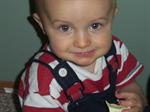
People change and develop throughout their lives. Most remarkable are the changes that occur throughout childhood to adolescence. As children develop, they appear to go through different stages. Different behaviours and abilities can be expected in those different stages. Developmental theories identify the different stages of development and attempt to explain why a child will be likely to behave in a particular way. Having some knowledge about what to expect throughout a certain phase of a child’s life can help to distinguish between appropriate and inappropriate behaviour, and can also provide some guidance for the most effective and appropriate way for an adult to respond to the child.
Stages
There are many different theories that suggest that children go from one stage to another. We will now discuss some of them, but before we do, you should bear in mind that stage theories have been criticised because:
- Not all children are the same - some will go through stage 1, stage 2, stage 3, and so on. Some will jump around stage 1, stage 3, and stage 2. Some will miss a stage altogether. It will really depend on the child.
- Child psychologists have found that some aspects of children’s behaviour can vary across cultures, so we cannot say that ALL children will go through the same developmental stages.
- Stage theories often fail to take into account the significance of social context and social demands - their social knowledge and understanding can play a major role in how they behave.
Having said this, stage theories are still useful as a means of comparing a child’s development to what might be expected at a given age. We will now look at some of the important stage theories.
Areas of Child Development
When we consider the developing child, we can see that the different areas of their development are interlinked. For example, physical development allows children to put on "dressing-up" clothes, but it is their cognitive ability which allows them to pretend - to role-play being a pirate or princess. It also allows a child to communicate with others, which also links into their social development. So, whilst the areas of development can be viewed separately, it is important to realise that they are all interlinked.
Physical Development Starts Early
Many changes occur in the first 18 months of a baby’s life. When babies are first born, they have very basic motor abilities. They have a range of inborn reflex responses that occur involuntarily in response to specific stimuli. These reflexes are primarily to ensure the baby’s adaptation and survival in their new world. Basic reflexes include breathing, sucking, blinking and swallowing. These reflexes will stay with the child for life but become partly, or entirely, voluntary responses.
Babies are also born with a range of other reflexes that weaken and disappear over a few months. For example, the "rooting reflex," where the baby turns their head in the direction of touch to the cheek (in order to find a breast or bottle to feed from), and the "grasping reflex," where the child will curl their fingers around objects placed in their palms.
Social and Emotional Development
At around four weeks of age, a baby will begin to focus on faces, then by six weeks they may start to smile at familiar faces. At around two to six months, as the baby’s eyesight develops, they will begin to connect more with what they see, hear, taste and feel. The baby will begin to recognise emotions in others and also recognise emotions in themselves such as fear, sadness, happiness, and being excited. From six to nine months, a baby will start to work out the difference between caregivers and strangers, adults and children. At around nine to twelve months, a baby will experience a range of different moods and emotions. He/she should also be able to entertain herself/himself in some ways.
Who will benefit from studying this course?
The Child Psychology course is of particular benefit to students and workers in the following professions:
- Youth work
- Child and adolescent counselling
- School counselling
- Teaching, teacher aides & school employees
- Child psychology
- Social work
- Childcare
- Children's services
- Medical and health professions
This course is suitable for students of
psychology and counselling. It is also of considerable value to people
in other related professions such as youth workers,
social workers, teachers, and those working in childcare and health care
roles.
What do our students think about the course?
Judy Augustine is a childcare worker who completed the Child Psychology course. She said - "It's very interesting. I am always fascinated by the children's behaviour. Helps in my work and with my own children, to have a clear understanding of their nature/nurture. I made the right choice of my course. The credit goes to ACS."
If you are interested in learning more about child psychology then perhaps, like Judy, it is time for you to make the right decision and enrol.
Any Questions?
Our psychology and childcare tutors are delighted to answer any questions you may have about this course or our other courses.